Why This Module Matters
In everyday life, we often face missing information such as unknown prices, ages, distances, and quantities. For example, you may know the total bill but not the price of each item, or the total distance travelled but not the time taken.
Algebra allows us to represent these unknown values using symbols (letters) so they can be calculated logically instead of guessed. This transforms real-world situations into clear and structured mathematical equations.
This skill is essential in business budgeting, scientific calculations, engineering design, shopping decisions, and everyday problem solving.
Understanding Variables
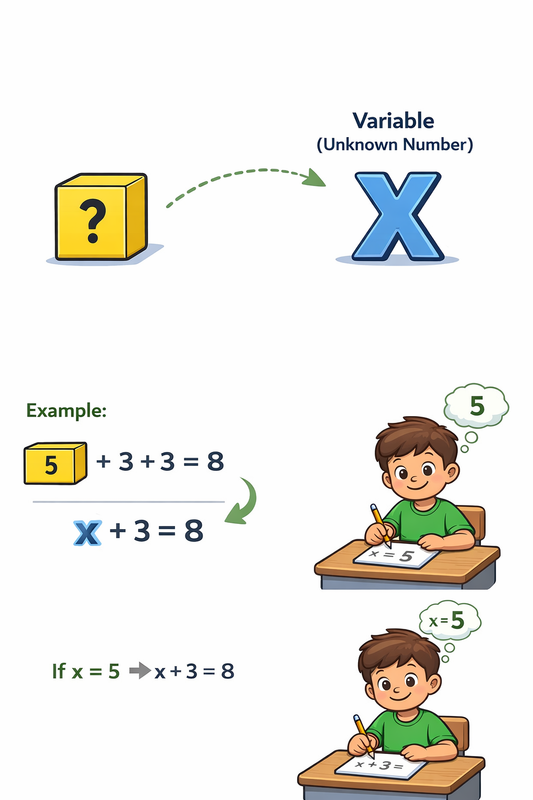
A variable is a letter such as x, y, or a that represents a number we do not yet know. It acts as a placeholder for missing information in a problem.
In earlier modules, you used empty boxes to represent unknown values. In algebra, we replace those boxes with letters so we can build real equations and solve bigger problems.
Once a variable is given a value, it can be substituted into an equation and solved step by step using logic.
Example:
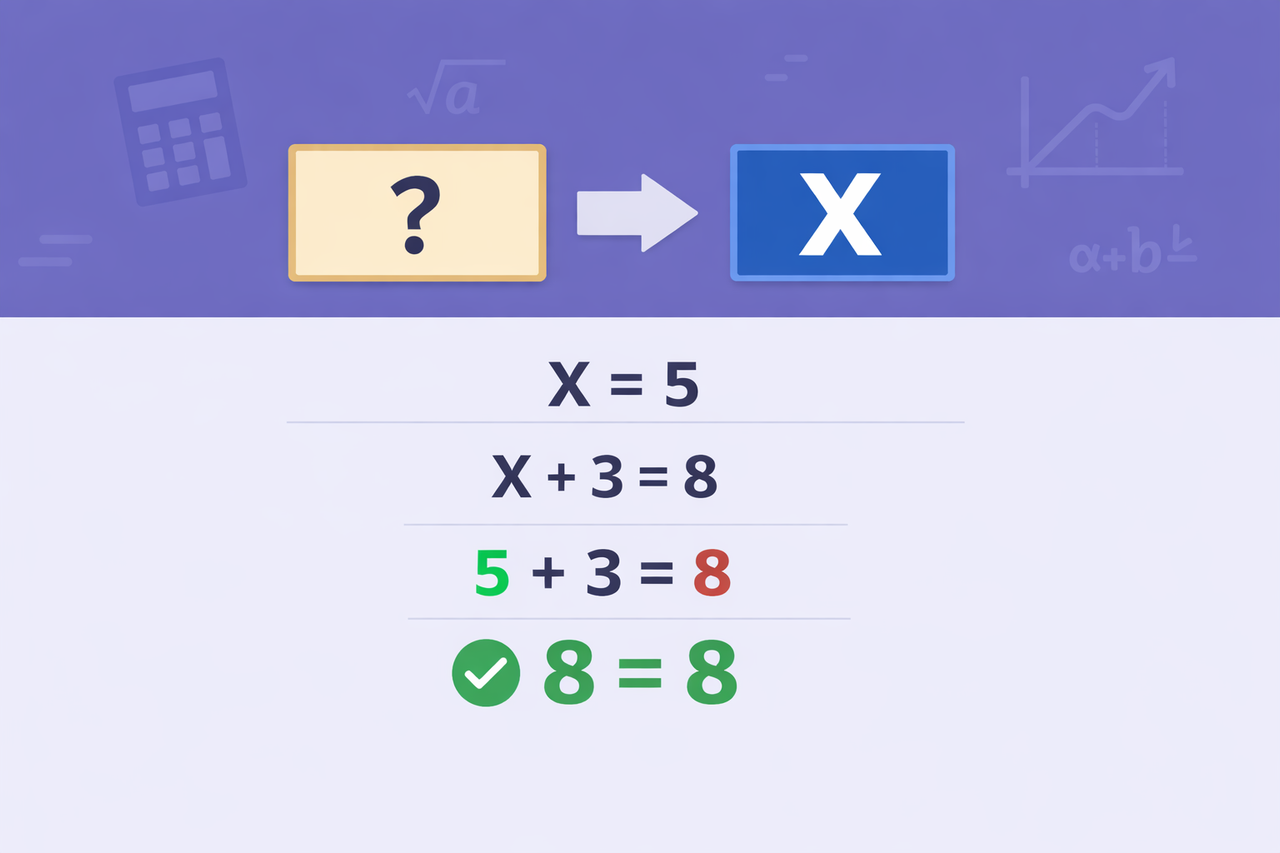
If x = 5 → x + 3 = 8
Variable Logic Flow
Solving algebra problems follows a clear and logical thinking process. Instead of guessing numbers, we move step by step to understand and solve unknown values.
First, we identify the unknown quantity in the problem. Next, we replace that unknown with a variable (a letter). Then, we form an equation and finally solve it logically.
This predictable flow makes algebra simple, organised, and easy to master.
Guided Practice – Substituting Values
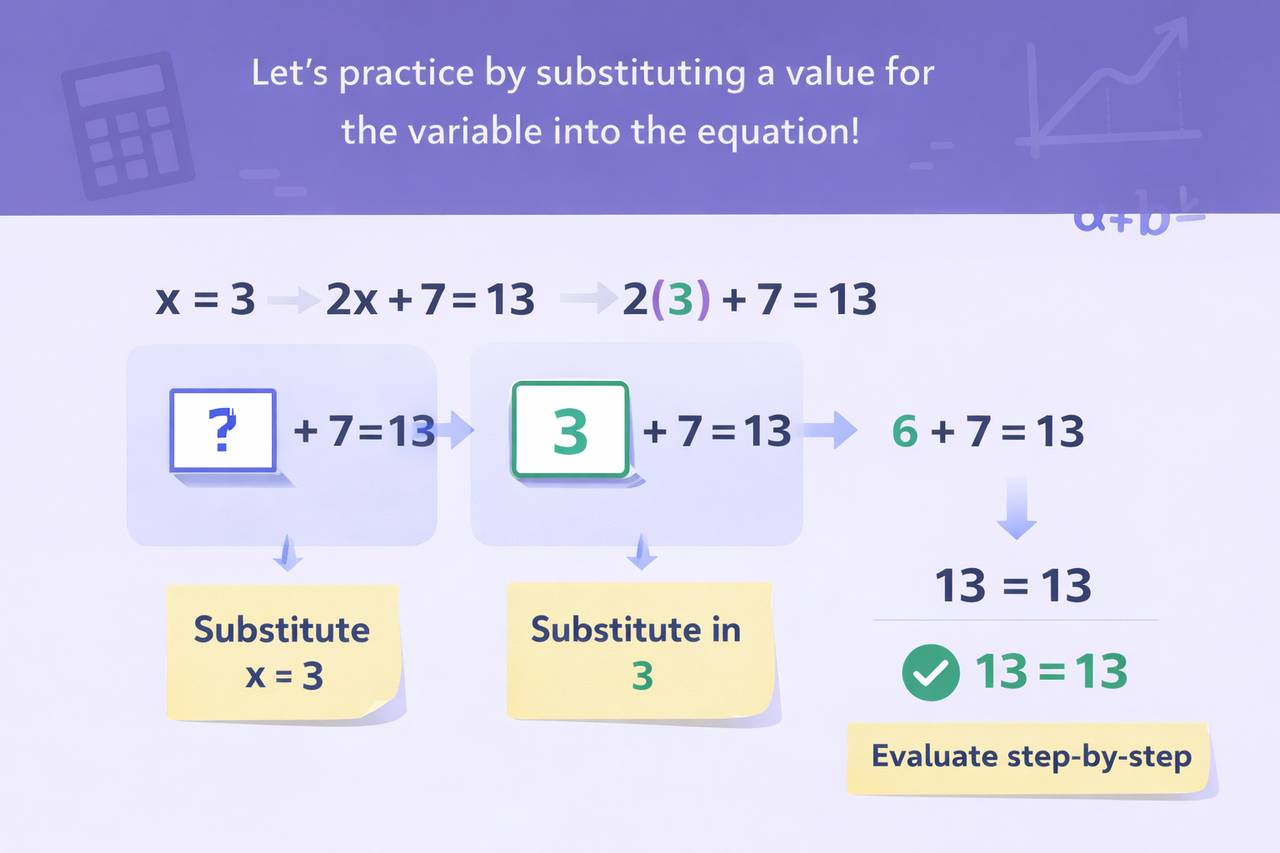
Now let’s practice using variables by replacing them with real numbers and solving step by step. This helps build confidence and understanding of how algebra works in action.
Follow the process carefully: replace the variable with the given value, simplify the expression, and check if the equation balances correctly.
Example Practice:
If x = 3, solve: 2x + 7 = 13
Turning Words into Algebra
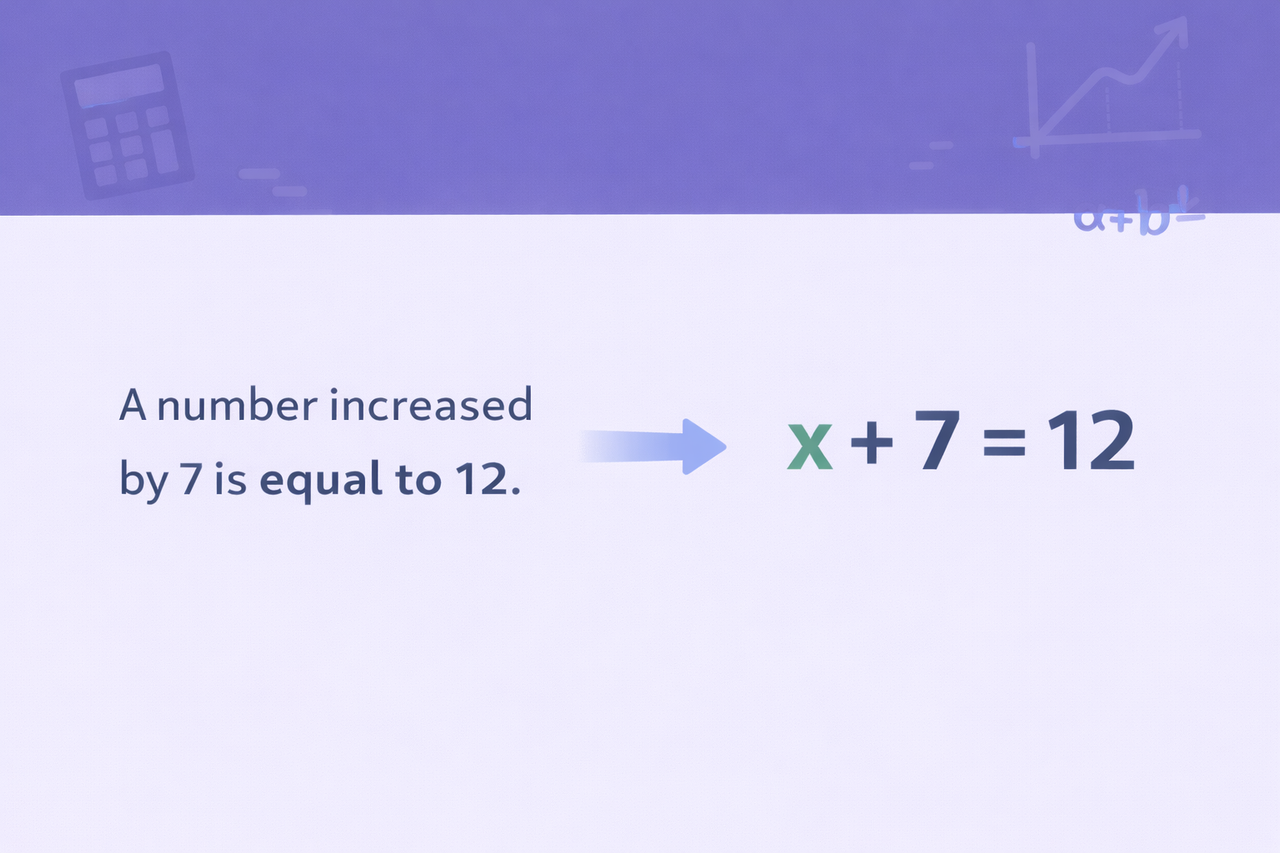
One of the most important skills in algebra is converting real-life sentences into mathematical equations. This allows us to clearly represent situations and solve them logically.
We assign a variable to the unknown value and express relationships using numbers and symbols. This transformation makes complex problems simple and structured.
This skill is widely used in advanced mathematics, science formulas, business planning, and engineering calculations.
Example:
“A number increased by 7 is equal to 12”
→ x + 7 = 12