
Claims vs Reality — Spectacle, Power, and the Limits of Familiar Storytelling
Context / History Introduction
Avatar Fire and Ash review: This in-depth analysis examines whether James Cameron’s latest Avatar film delivers real narrative evolution or relies mainly on visual spectacle.
The Avatar franchise has always existed at the intersection of technological ambition and cinematic scale. When James Cameron released Avatar in 2009, it fundamentally reshaped how large-scale blockbusters were produced, marketed, and experienced. Its unprecedented success was driven less by narrative originality and more by technical audacity, immersive world-building, and a level of visual realism that redefined audience expectations.
More than a decade later, The Way of Water (2022) refined that vision, proving that Avatar was not a one-time technical experiment but a long-term cinematic ecosystem. That sequel emphasized emotional continuity and environmental immersion, reinforcing the franchise’s commitment to spectacle grounded in thematic purpose.
Avatar: Fire and Ash (2025) arrives with a heavier burden than any previous installment. Visual excellence is no longer a novelty. Audiences now expect emotional complexity, ideological depth, and character development that can justify the franchise’s scale and extended runtimes. Cameron positioned this film as the darkest chapter yet — one designed to challenge not only external threats, but the moral foundations of Pandora itself.
Editorial Hook — Claims vs Reality
The studio narrative surrounding Fire and Ash emphasised emotional intensity and moral complexity. Cameron suggested that this installment would challenge the audience’s perception of the Na’vi, moving beyond the familiar “peaceful natives versus destructive outsiders” dynamic that defined earlier entries.
In reality, the film does deepen its thematic tone and introduces internal conflict within Na’vi society. However, while the emotional atmosphere is heavier and more serious, the underlying narrative structure remains largely unchanged. Fire and Ash expands the world far more aggressively than it evolves the storytelling language of the franchise.
What Is Avatar: Fire and Ash?
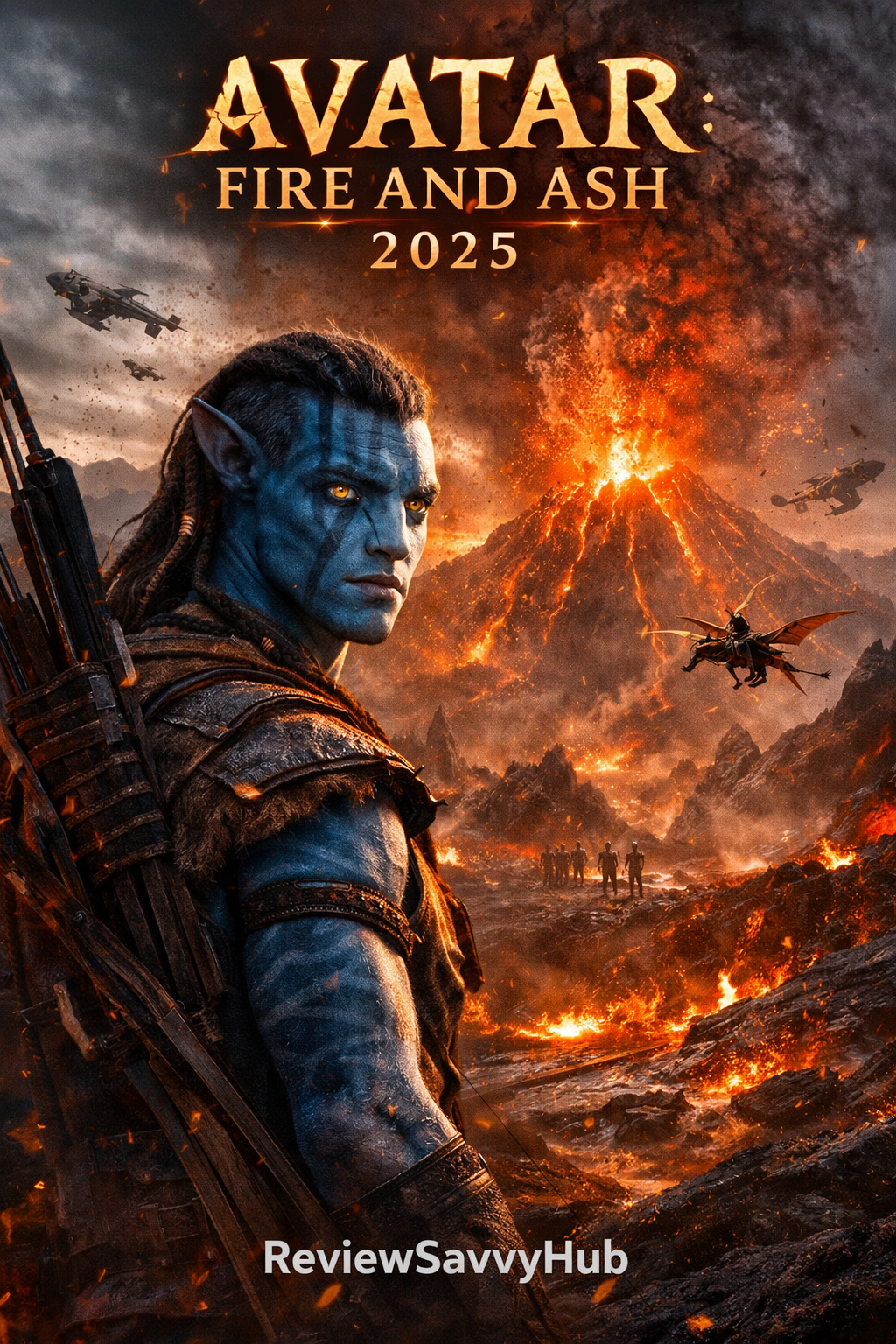
Avatar: Fire and Ash shifts the setting to Pandora’s most hostile regions — volcanic landscapes shaped by fire, ash, and environmental instability. These regions are home to a Na’vi tribe whose philosophy contrasts sharply with the harmony-driven worldview previously established. Survival, control, and dominance define their culture, creating ideological tension rather than simple villainy.
For the first time in the franchise, Jake Sully and his family confront conflict that is not imposed from outside forces, but born from within their own civilisation. This internal division reframes Pandora as a living, politically complex society rather than a symbolic paradise, pushing the narrative closer to moral and ideological drama than pure environmental allegory.
Cast & Crew
Avatar: Fire and Ash is directed, co-written, and produced by James Cameron, whose creative control continues to shape the franchise’s identity. Cameron’s direction prioritises environmental scale, physical realism, and thematic consistency, ensuring continuity with previous installments while steering the tone into darker territory.
Sam Worthington returns as Jake Sully, portraying a leader increasingly defined by moral pressure rather than discovery. Zoe Saldaña reprises her role as Neytiri, delivering a performance marked by emotional restraint and ideological tension. Sigourney Weaver continues her unique presence within the franchise, contributing emotional grounding through a role that blends human vulnerability with Pandora’s spiritual dimension.
The supporting cast expands Pandora’s social structure rather than merely advancing plot mechanics. While not all secondary characters receive deep narrative development, performances remain consistent with the franchise’s symbolic storytelling approach. Behind the camera, Cameron’s long-standing collaboration with elite visual effects teams results in a production that prioritises cohesion over individual spectacle.
Real-World Performance
From a production standpoint, Fire and Ash represents the upper limit of what modern blockbuster cinema can currently achieve. The volcanic regions feel physically tangible, with heat distortion, ash density, and environmental scale rendered with extraordinary precision. Fire behaves organically rather than theatrically, reinforcing the sense that Pandora remains a reactive, living world rather than a digital construct.
Sound design plays a critical role in sustaining immersion. Deep environmental rumbles, sharp percussive tribal rhythms, and moments of deliberate silence combine to create constant tension. In premium formats such as IMAX and Dolby Cinema, the experience becomes overwhelming in a way few contemporary films manage to replicate.
Narratively, the film adopts a darker and more serious tone. Violence is portrayed as consequential rather than heroic, and moral decisions carry visible emotional cost. However, the storytelling remains cautious. Key developments are foreshadowed early, and character arcs often prioritise symbolism over psychological depth. The emotional impact is consistent, but rarely surprising.
Comparison — Franchise & Genre Perspective
Within the Avatar franchise, Fire and Ash stands as the most visually intense and thematically heavy installment to date. Compared to the original film’s simplicity and The Way of Water’s family-focused narrative, this entry introduces ideological division and moral ambiguity.
In the broader science-fiction landscape, the film surpasses most competitors in technical execution and environmental immersion. When measured purely on storytelling innovation, however, it aligns closely with established blockbuster conventions rather than redefining them.
SWOT Analysis
Strengths
Avatar: Fire and Ash reinforces the franchise’s dominance in cinematic immersion. Its greatest strength lies in the consistency of its world-building, where every environment feels physically grounded and narratively intentional. Visual effects, sound design, and environmental scale operate in harmony, creating a cohesive cinematic experience. The darker thematic direction adds a sense of maturity that differentiates this entry from earlier installments.
Weaknesses
Despite its heavier tone, the film remains structurally conservative. The narrative follows familiar blockbuster patterns, and while emotional stakes are higher, they are rarely unexpected. Several supporting characters function more as ideological symbols than fully developed individuals, limiting emotional realism in key moments.
Opportunities
By introducing ideological division within Na’vi society, Fire and Ash creates space for more complex storytelling in future installments. The franchise now has the opportunity to explore political, cultural, and philosophical conflicts beyond environmental allegory.
Threats
The most significant threat facing the film is audience fatigue. As runtimes continue to expand and visual spectacle becomes normalized, future entries may struggle to sustain engagement without deeper narrative risk-taking.
PESTLE Analysis
Political
The film shifts focus from external oppression to internal power struggles, portraying Pandora as a society capable of division rather than idealized unity.
Economic
With its massive production budget, Fire and Ash represents a high-risk but historically reliable investment. The global strength of the Avatar brand provides financial stability despite escalating costs.
Social
Themes of environmental destruction, moral responsibility, and cultural fragmentation reflect contemporary global concerns, enhancing relevance beyond entertainment.
Technological
The film establishes new benchmarks in motion capture, environmental simulation, and large-scale digital rendering, reinforcing Avatar’s role as an industry reference point.
Legal
Strong intellectual property control under Disney ensures long-term franchise continuity and protection.
Environmental
While the film delivers a powerful ecological message, it also highlights an ongoing industry contradiction: the environmental cost of producing large-scale, resource-intensive blockbusters.
Accuracy & Limitations
While the film communicates its themes clearly, it simplifies complex moral and political ideas into symbolic conflicts. Characters often function as ideological representatives rather than fully realised individuals, limiting emotional realism despite strong performances.
Audience Reality
Avatar: Fire and Ash is best suited for audiences who value immersive cinematic experiences and large-scale world-building. It rewards viewers who engage with cinema as spectacle and atmosphere rather than intimate character study.
Those seeking tightly written, character-driven drama or experimental storytelling may find the film visually impressive but narratively restrained.
Final Verdict — ReviewSavvyHub Score
This Avatar Fire and Ash review confirms that the franchise still leads in cinematic immersion, even if narrative risks remain limited.
Avatar: Fire and Ash (2025) confirms that Avatar remains the industry leader in cinematic immersion and technological ambition. While it introduces darker themes and internal conflict, it remains narratively conservative.
This is a film designed to be felt more than analysed.
⭐ ReviewSavvyHub Score: 4.2 / 5
Transparency Note
This review is based on structured narrative analysis, franchise context, and audience reception patterns. No studio involvement, promotional material, or paid influence was involved.