Buyer’s Guide | ReviewSavvyHub
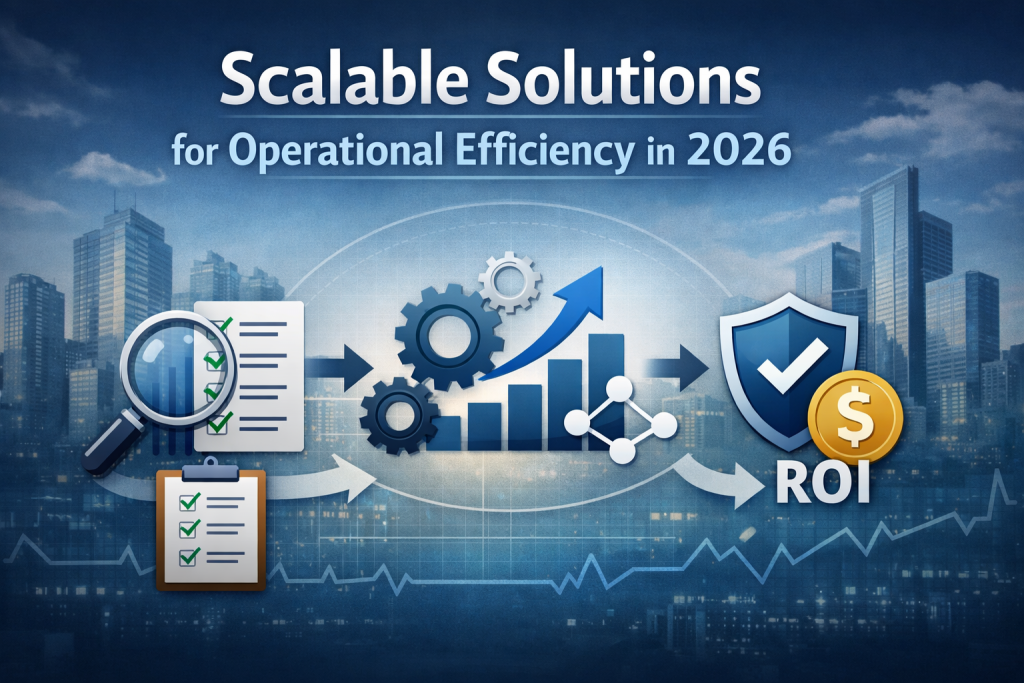
Scalable Solutions for Operational Efficiency are one of the most promised — and most misunderstood — concepts in B2B technology in 2026.
Every B2B platform claims to grow with your business. Yet most operational failures in 2026 happen after companies scale — not before.
The problem is not growth itself.
It is structurally fragile systems disguised as “scalable solutions.”
Tools that perform smoothly for small teams often struggle under heavier workloads. Costs quietly rise as usage expands. Workflows that once felt efficient slowly become complex and slow.
This Buyer’s Guide separates proven scalability from marketing hype, real operational efficiency from feature overload, and sustainable ROI from hidden cost traps — so business leaders can make smarter long-term decisions.
Claims vs Reality: Why “Scalable” Rarely Means What Vendors Promise
Scalability has become a buzzword in B2B technology marketing. Almost every platform positions itself as enterprise-ready and future-proof.
In reality, many systems scale technically while breaking operationally.
What works for ten users introduces friction at fifty. What feels intuitive in early adoption becomes complicated when workflows multiply. Performance bottlenecks appear, integrations weaken, and support dependencies increase.
The nuance is simple but critical: true scalability is not about adding users — it is about maintaining simplicity, reliability, and cost efficiency as complexity grows.
What Operational Efficiency Actually Looks Like in 2026
Operational efficiency today is measured less by speed and more by stability.
High-performing organizations focus on smooth data flow, minimal manual intervention, predictable costs, and systems that remain intuitive under pressure.
Rather than chasing feature-heavy platforms, smart businesses now prioritize workflow resilience and adoption sustainability.
Proven ROI increasingly comes from systems that quietly hold together — not those that promise revolutionary automation.
The Architecture Behind Truly Scalable Solutions
Scalable platforms are built differently.
Their workflows evolve naturally without forcing constant redesign. Integrations function as infrastructure rather than add-ons. Reliability is treated as a baseline, not a premium feature.
This structural strength allows growth without the hidden friction that destroys efficiency in fragile systems.
When these foundations are missing, scalability becomes a short-term illusion.
SWOT Analysis: Scalable Solutions for Business Operations
Strengths
Scalable solutions enable smoother growth, better cross-team coordination, and predictable operational performance. When built correctly, they reduce friction, improve adoption, and support long-term ROI.
Weaknesses
Many platforms struggle with hidden complexity, rising costs as usage grows, and integration instability. Over-engineered systems often require ongoing manual adjustments.
Opportunities
AI-driven automation, improved integration ecosystems, and modular platform design are creating genuinely scalable architectures. Businesses can now build lean yet powerful operational stacks.
Threats
Vendor lock-in, opaque pricing models, performance degradation under load, and overpromised capabilities remain major risks. Structural fragility often only becomes visible after scaling.
PESTLE Analysis: Scalability in the 2026 Business Environment
Political & Regulatory
Data protection regulations and compliance requirements continue tightening globally. Scalable systems must handle growth while maintaining regulatory adherence without heavy manual oversight.
Economic
Rising operational costs make efficiency more critical than ever. Businesses increasingly demand transparent pricing and predictable ROI as scale increases.
Social
Remote and hybrid workforces require platforms that scale collaboration smoothly across locations and teams.
Technological
AI automation and cloud infrastructure are accelerating scalability potential — but also increasing system complexity when poorly implemented.
Legal
Stronger service-level agreements and data responsibility laws place pressure on vendors to deliver real reliability.
Environmental
Sustainable digital infrastructure is gaining importance, pushing companies toward efficient cloud and workflow optimization solutions.
Why Businesses Keep Choosing Fragile “Scalable” Platforms
Modern buyers face overwhelming choice.
Aggressive marketing claims, endless feature lists, and complex pricing structures create cognitive overload. Under time pressure, organizations often choose based on surface appeal rather than long-term operational behaviour.
This leads to quick wins followed by long-term inefficiencies.
Good Buyer’s Guides exist to reduce this decision fatigue by highlighting structural realities instead of promotional promises.
Scalability as a Strategic Growth Advantage
Organizations built on truly scalable systems expand smoothly, maintain productivity, and control costs.
Those built on fragile platforms face bottlenecks, rising overhead, and costly migrations.
Scalability is not a technical upgrade — it is a strategic foundation.
The Verdict: How Smart Business Buyers Should Choose in 2026
Smart buyers focus on stability over novelty, integration strength over isolated innovation, validated reliability over marketing hype, and transparent long-term ROI over attractive starting prices.
True operational efficiency is built on simplicity that holds up under scale.
ReviewSavvyHub Judgement
Scalability is one of the most misused promises in B2B technology.
Most platforms scale in theory. Few scale in real operational environments.
Businesses that prioritize resilient workflows, seamless integrations, enterprise-grade reliability, and cost transparency build sustainable growth engines.
Those who chase scalability hype inherit structural fragility — and pay for it later.
Transparency Note
This Buyer’s Guide follows ReviewSavvyHub’s judgement-based framework, focusing on real-world operational performance rather than vendor marketing narratives.